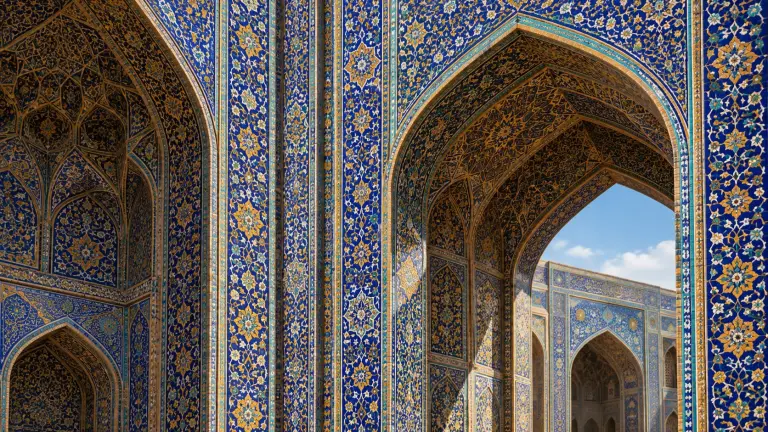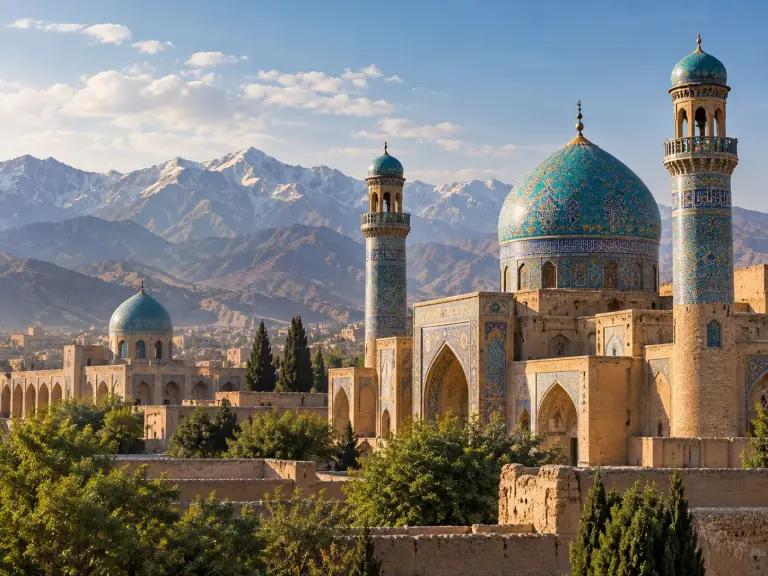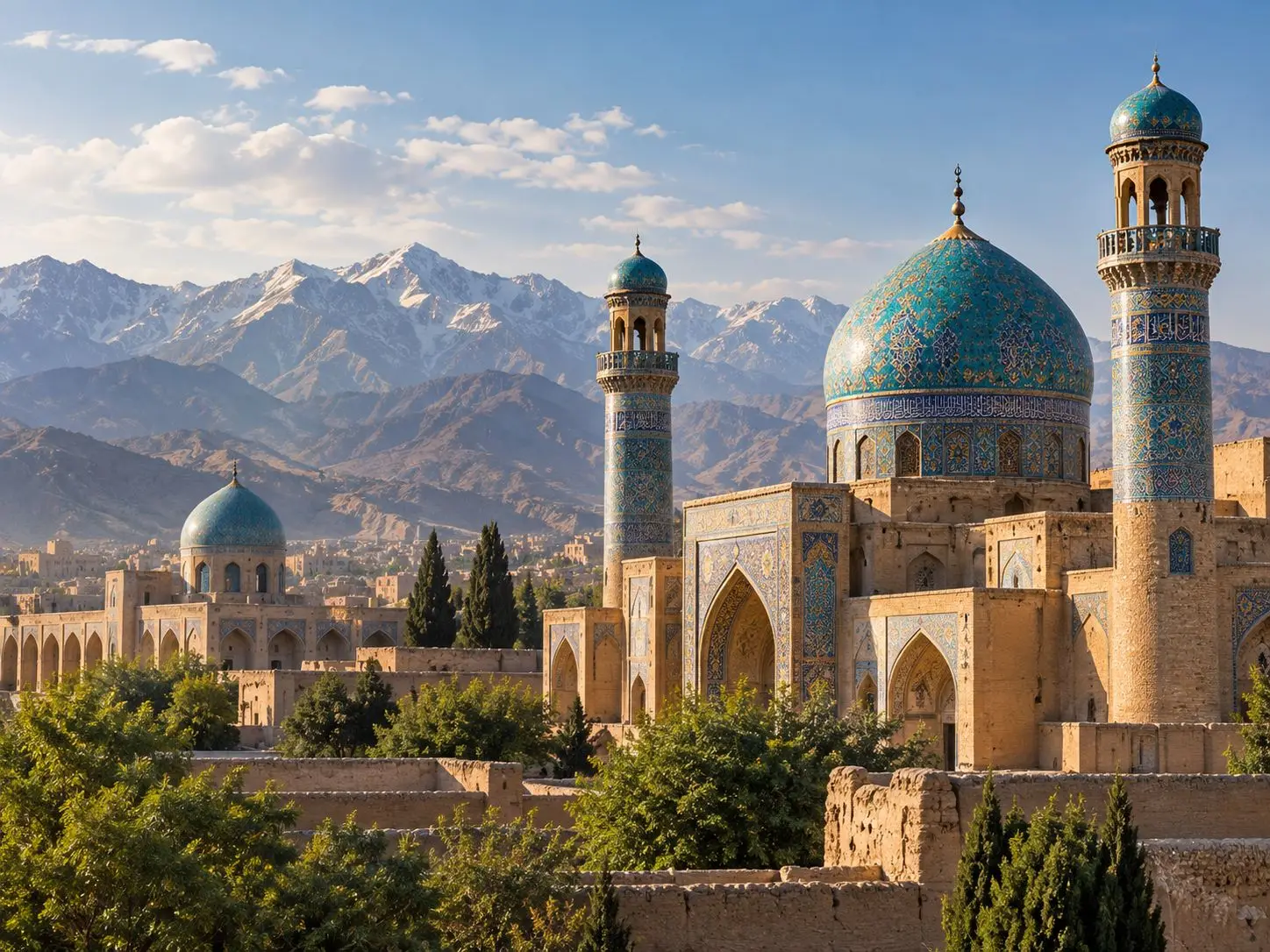
Herat, the great city of western Afghanistan, stands in a fertile valley watered by the Hari River (Harirud), not far from the border with Iran. For more than two thousand years it has been a station on the caravan roads of Khorasan, and in the 15th century its court was celebrated across the Muslim East for art and learning. Although the modern city has grown far beyond its walls, the old town has largely kept its historic footprint, and many of its Islamic monuments survive.
From ancient Aria to the Ghurids
Herat is thought to have begun around 500 BC as the Persian town of Artacoana, or Aria, on the plain beside the river. Alexander the Great captured it in 330 BC, and a citadel was built. The city kept its strategic value under the Seleucids, Parthians and Hephthalites, and by the end of the 8th century it was the western bastion of the Abbasid caliphate in the region.
When the Ghurids took Herat in 1175, it was famous for its metalwork, especially decorated and inlaid bronze. The Ghurid ruler Ghiyath al-Din Muhammad extensively restored the Great Mosque in the 12th century, and the inscription recording his work can still be seen. After the Mongol destruction of 1221–22, the Kart dynasty rebuilt the town and its canals.
The Timurid golden age
Herat’s finest era began in 1397, when Shahrukh, youngest son of Timur, was made its governor. From 1405 until his death in 1447 he ruled the Timurid state from here, rebuilding the city walls, the citadel and the main Chahar-su bazaar, and founding a famous madrasa and khanaqah. His wife, Gawhar Shad, sponsored a madrasa and mosque north of the city between 1417 and 1437.
Under Sultan Husayn Bayqara (r. 1470–1506), Herat’s court became renowned across the Muslim East for its patronage of the arts and scholarship, and later Persian historians remembered his reign as a golden age. The painter Behzad and the poet Jami are among the names linked to the city, along with Khwaja Abdullah Ansari (d. 1089), whose shrine at Gazurgah is still visited today. The courtier and patron Mir Ali-Shir Navai also founded charitable endowments in the city.
Citadel, minarets and the old city
The citadel, Qala Ikhtiyaruddin, stands on the site of an ancient fortress; most of its surviving towers date from the early 14th century, and some still carry tilework commissioned by Shahrukh. North of the old city, the Musalla complex preserves the mausoleum of Gawhar Shad, with its ribbed, tiled dome, where she and her son Baysunghur are buried. Most of the complex was demolished in 1885, and an earthquake in 1931 toppled more minarets; only five now remain standing.
The old city is nearly square, divided into four quarters named after its gates and bazaars: Khush in the east, Iraq in the west, Qandahar in the south and Malik in the north. Its alleys lead to courtyard houses, mosques, baths and cisterns. Since 2005 the Aga Khan Trust for Culture has mapped the old city and conserved five historic houses and 17 public buildings, as well as the citadel itself.