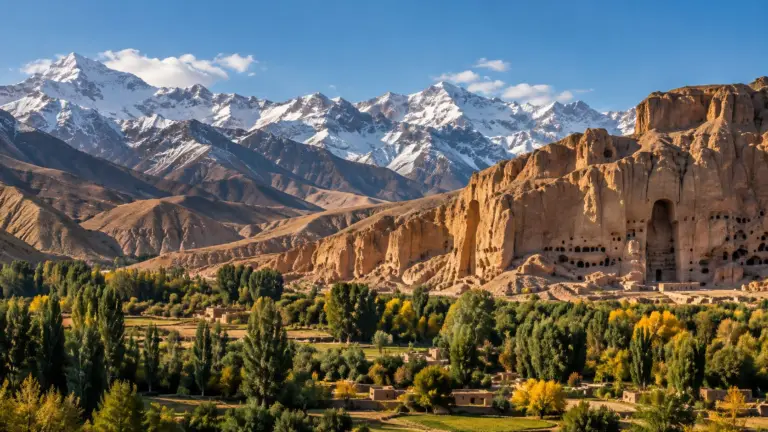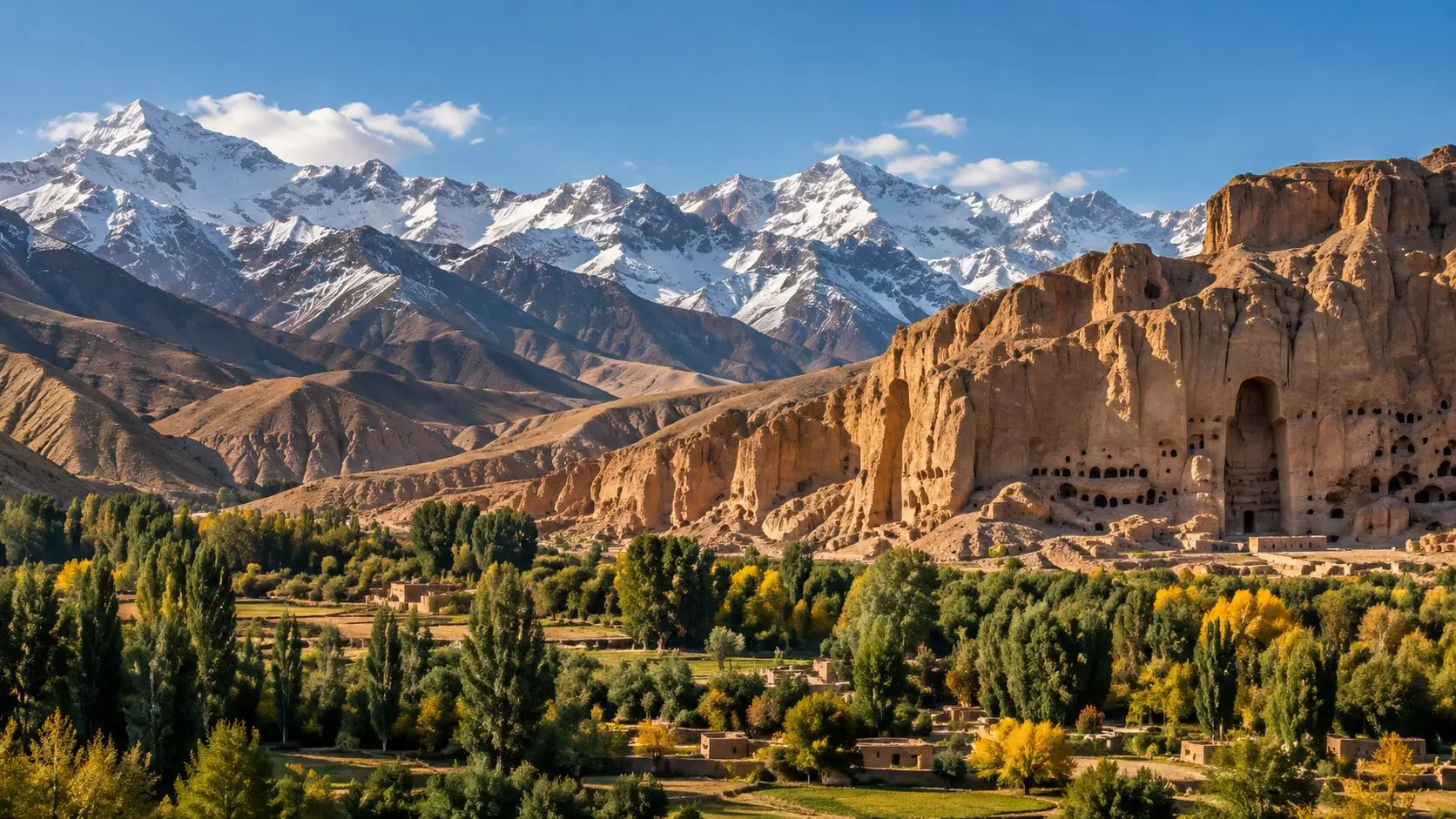
This film takes viewers into the Bamiyan Valley, a broad basin in Afghanistan’s central highlands between the Hindu Kush and the Koh-e Baba range. Its focus is the long cliff on the valley’s north side, honeycombed with caves that once served as Buddhist monasteries, chapels and sanctuaries, some still bearing traces of wall paintings. Two vast niches mark where standing Buddhas 55 and 38 metres tall stood from the 6th and 7th centuries until their destruction in 2001.
Bamiyan prospered as a halt on caravan routes linking Bactria with the Kabul basin and India, and its art blended Indian, Hellenistic, Sasanian and later Islamic influences. Below the cliff, irrigated fields, poplar groves and the ruins of the Shahr-e Gholghola fortress complete a landscape inscribed as World Heritage by UNESCO in 2003.