Rabia bint Kab, remembered as Rabia Balkhi, lived in Balkh in the 10th century and is the first woman known to have written poetry in New Persian. Only a small body of her verse survives, in Persian and Arabic, but the story of her love, courage and tragic death has made her a lasting symbol in Afghan culture, especially for women who write.
A poet of the Samanid age
Rabia lived under the Samanids and was a contemporary of the poet Rudaki (d. 940/41). Her father, Kab, is described as an amir, or ruler, of Balkh, from a family of Arab descent that had settled in Khorasan after the Muslim conquest. She is also known by the name Quzdari, which the scholar Vladimir Minorsky connected with the town of Khuzdar in Baluchistan.
Early writers praise her learning and wit. The 13th-century anthologist Muhammad Awfi, in his Lubab al-albab, describes her as surpassing men in accomplishment and as very intelligent. Her surviving poems are love lyrics, and some accounts count her among the founders of Dari poetry and the early composers of the ghazal.
From poet to legend
Later authors turned her life into a legend. The fullest version appears in the Ilahi-nama of the Sufi poet Attar of Nishapur (d. 1221). In it Rabia falls in love with Baktash, a Turkish slave in the household of her brother Harith, and writes poems for him. When Harith learns of the love, he has her shut in a bathhouse, where she dies, writing her last verses in her own blood.
Another episode tells how the poet Rudaki recited one of her verses at a gathering in Bukhara, revealing her love to her brother. Attar presented her as a Sufi whose earthly love points toward the love of God, and in the 15th century Jami listed her among Sufi women in his Nafahat al-uns. Modern scholars see her as a court poet rather than a mystic, whose image later writers reshaped.
Remembered in Balkh
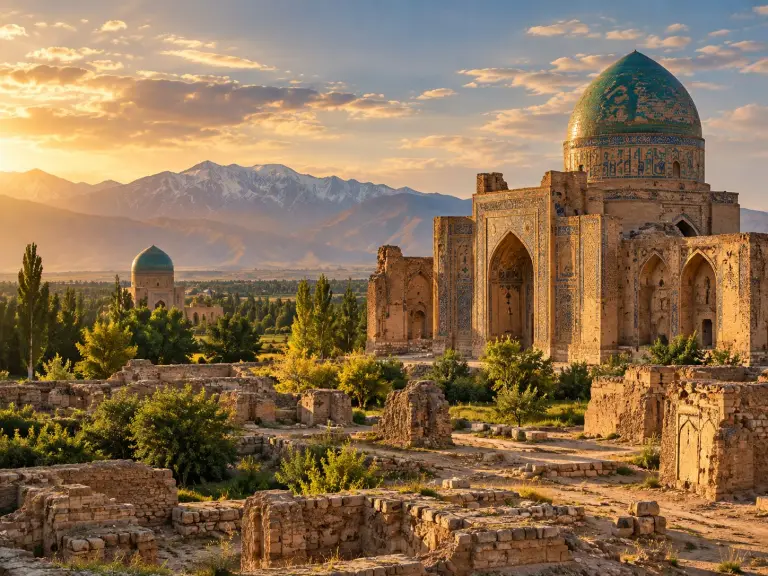
Rabia’s tomb lies in the precinct of the shrine of Khwaja Abu Nasr Parsa, the early 16th-century Sufi shrine at the centre of Balkh. During restoration of the shrine and its park, supported by the German Federal Foreign Office, the Aga Khan Trust for Culture consolidated her tomb as one of two important historic structures there.
Across Afghanistan, schools, hospitals and a university carry her name. Her story is retold as that of a woman who would not be silenced, and for many Afghan women she stands for the right to speak and to write.