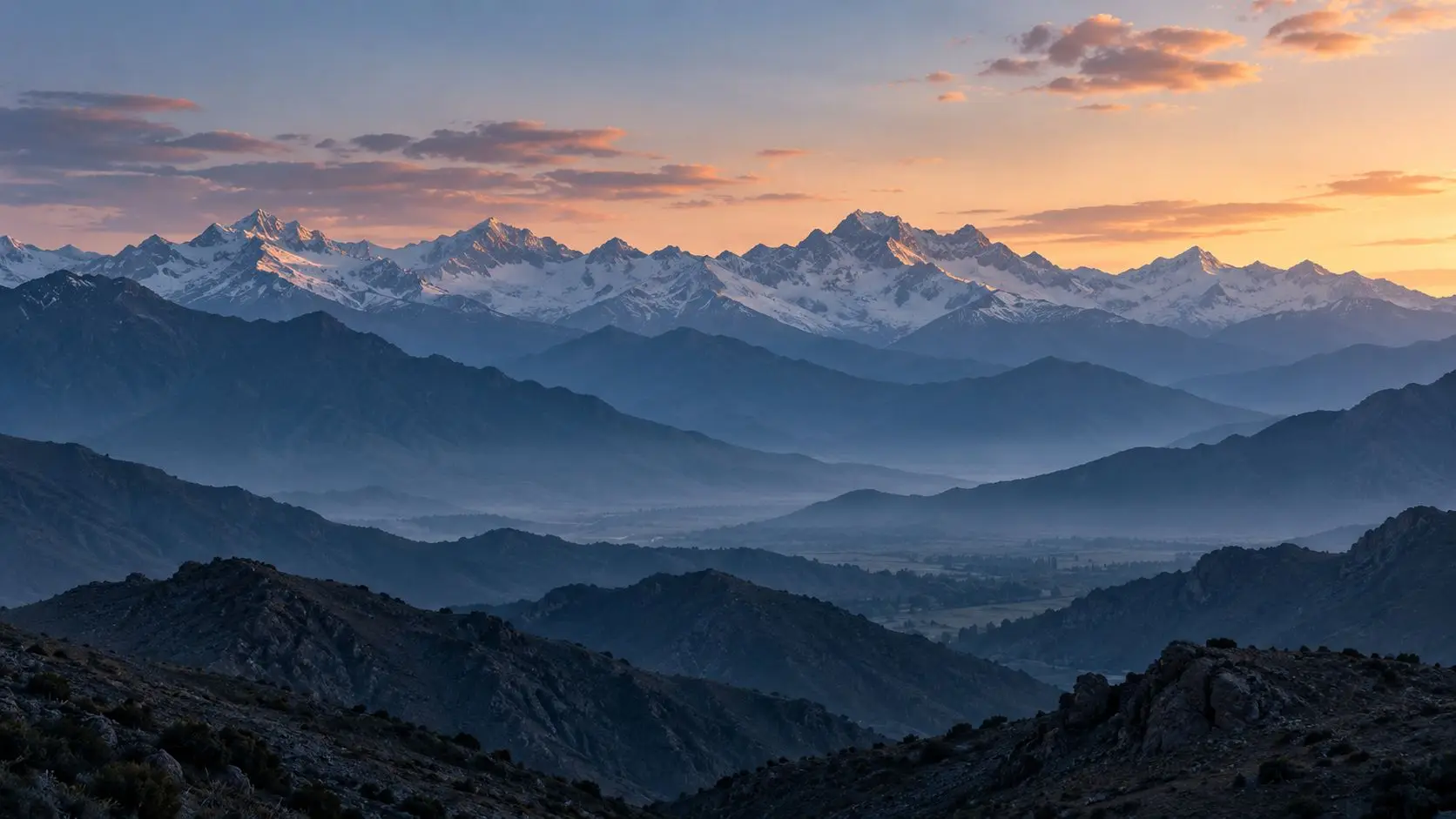
North-east of Kabul, the Panjshir River has carved a long, narrow valley into the southern slopes of the Hindu Kush. Villages and fields crowd the valley floor beneath steep mountain walls, and the slopes above hold rich deposits of emerald. The name Panjshir means “five lions”, and local tradition says it honours five spiritual brothers who once lived here. Long counted as part of Parwan, the valley is today the heart of its own province.
River and passes
The Panjshir River is fed by glaciers high in the Hindu Kush. It flows down the length of the valley and joins the Kabul River at Sarobi, about 55 kilometres east of Kabul. Travellers from Kabul traditionally reached the valley by way of Charikar and Jabal-os-Seraj, and followed the north bank of the river upstream to Rokha and beyond.
At its head the valley climbs toward the main crest of the Hindu Kush. The Anjuman Pass, at about 4,400 metres, leads over the range into the Kokcha basin of Badakhshan. Such high, steep crossings have long set the valley somewhat apart from the lands around it.
Silver in the Middle Ages
Panjshir’s mineral wealth was famous more than a thousand years ago. Medieval Arabic and Persian writers counted Panjhir, as they called it, among the principal silver-producing districts of the eastern Islamic world, and its mines were reckoned among the richest of all. A mint was set up close to the mines, so that silver dug from these mountains could be struck directly into coins.
Green stones of the Hindu Kush
Today the valley is best known for emeralds. The deposit was reportedly identified by Soviet geologists in 1970, and serious mining began in the following decade. The mines lie at about 3,000 to 4,000 metres on steep slopes, and miners walk for hours up rough paths to reach them. In the mid-1980s six mines were reported active, with names such as Darkhenj, Mikeni and Buzmal.
The emeralds grow in veins of quartz and other minerals that cut through ancient metamorphosed limestones and slates, and miners use glints of pyrite as a sign that emeralds may be near. Panjshir crystals are typically a rich, dark green, and the finest have been compared with the celebrated emeralds of Muzo in Colombia. Crystals over 10 carats were common in the 1980s, and one Buzmal crystal weighed 190.5 carats. By 1990 villagers were working hundreds of tunnels and shafts, and that year’s output was put at about 10 million US dollars.
Life in the valley
The Panjshir is densely settled, and most of its people are Dari-speaking Tajiks who farm the narrow valley floor. Mining is often a shared enterprise: business people provide food, tools and equipment, and the profits are divided between owners and miners, many of whom began as miners themselves. Long, slender crystals known as “pencils” travel from the valley to the gem traders of Kabul, and one gemologist who made the trek on horseback wrote warmly of the hospitality he found among the miners and dealers.